
When specifying a printed circuit board, some customers request a halogen-free build. Halogen-free boards are considered an environmentally preferable option: the base material is made from raw materials that do not contain halogens. But what does that mean in practice for the laminate, the solder mask, and the finished board?
Electronic equipment contains certain materials that include halogens at maximum concentration limits. To create a halogen-free circuit board, some of these materials must be replaced or their use reduced. The halogen content in the circuit also needs to be determined. Some substitute substances require special design considerations, and these factors ultimately need to be taken into account.
How halogen-free flame retardancy works
At present, the vast majority of halogen-free laminates are based on phosphorus and phosphorus-nitrogen systems. When a phosphorus-containing resin burns, thermal decomposition produces metaphosphoric acid, which is strongly dehydrating. This causes a carbonized film to form on the surface of the polymer resin, isolating the burning surface from air and extinguishing the flame to achieve flame retardancy. Polymers containing phosphorus-nitrogen compounds release non-combustible gases during combustion, which assist the resin system in flame retardancy. So what are the characteristics of halogen-free laminates?
1. Insulation properties of the material
Because phosphorus or nitrogen replaces halogen atoms, the polarity of the molecular bonds in the epoxy resin is reduced to some extent, thereby improving insulation resistance and breakdown resistance.
2. Water absorption of the material
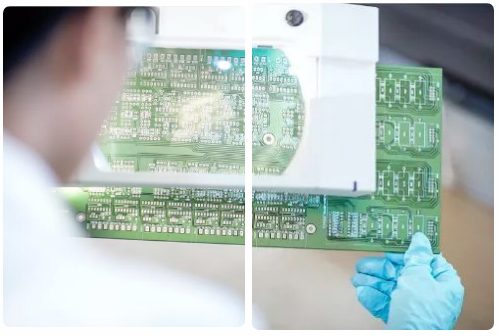
In halogen-free laminates, the nitrogen-phosphorus epoxy resin contains relatively less N and P compared with halogens, so the probability of forming hydrogen bonds with hydrogen atoms in water is lower than that of halogen materials. As a result, the water absorption of the material is lower than that of conventional halogen-based flame-retardant materials. For laminates, low water absorption has a certain influence on improving the reliability and stability of the material.
3. Thermal stability of the material
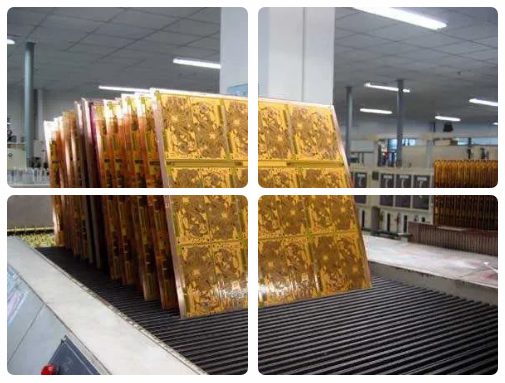
The nitrogen and phosphorus content in halogen-free laminates is greater than the halogen content in ordinary halogen-based materials, so the monomer molecular weight and Tg value are both increased. When heated, the molecular mobility is lower than that of conventional epoxy resin, so the coefficient of thermal expansion of halogen-free materials is relatively small.
Demand for halogen-free is growing
Compared with halogen-containing laminates, halogen-free laminates have more advantages, and the replacement of halogen-containing laminates by halogen-free laminates is a general trend. Many types of halogen-free solder mask inks are now available, and their performance is not much different from ordinary liquid photoimageable inks; in terms of specific operation, they are basically similar to ordinary inks.
Halogen-free circuit boards generally have good heat dissipation and reliability, making them suitable for the high-temperature processes required for lead-free circuits. Because they also have a lower dielectric constant, they can maintain signal integrity. Therefore, the demand for halogen-free circuit boards has been growing.
What this means for your build
- When your design calls for halogen-free construction, confirm that both the copper clad laminate (CCL) and the solder mask are halogen-free; a halogen-free laminate alone does not make the whole board halogen-free.
- Halogen-free laminates typically use phosphorus or phosphorus-nitrogen flame retardants, which can affect insulation resistance and breakdown voltage—review these parameters against your application's requirements.
- Lower water absorption in halogen-free materials can improve reliability and stability, which is beneficial for high-humidity environments and long-term operation.
- The higher Tg and lower coefficient of thermal expansion of halogen-free laminates can help with thermal cycling and lead-free reflow, but confirm the Tg value and thermal expansion data with your fabricator.
- If signal integrity is critical, the lower dielectric constant of halogen-free materials may be advantageous; discuss impedance control and stackup with your PCB manufacturer.
Source: compiled from public web sources.